
Dentist San Diego
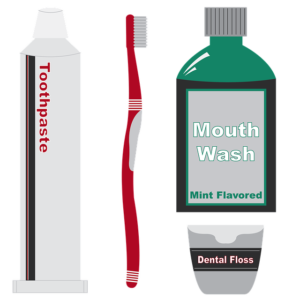 Mouthwash can be helpful in decreasing the amount of bacteria in your mouth. It can also be a useful way of combating decay. But not everyone needs to use a mouthwash. If you are wondering whether you should be using a mouthwash, here’s what you need to know.
Types of Mouthwash
Not all mouthwashes are made equal. Antiseptic mouthwashes work to fight bacteria, helping to reduce your risk of developing gingivitis, plaque build-up, or bad breath. More specialized mouthwashes for those with periodontal disease or dry mouth are also available with a prescription.
Do I Need to Use Mouthwash?
Talk to our experienced, oral health team about your daily brushing and flossing habits to hear our suggestions. Generally, if you are brushing twice each day and keeping up with flossing, you likely don’t need to use mouthwash. However, if you develop decay easily, it is best to consider an anti-cavity rinse. According to the Academy of General Dentistry (AGD), these mouthwashes are able to combat an additional 50% of decay-causing germs.
Mouthwash can also be effective at diffusing bad breath odors, so you can use it after eating strong smelling foods.
Tips on Using Mouthwash
If our dentist suggests you use a mouthwash, follow this advice. You should rinse your mouth after brushing and flossing. When doing so, your lips should be tightly closed as you swish the wash around. You will want to continue this for about 30 seconds. Make sure you spit the mouthwash out completely. Avoid rinsing your mouth out, as well as eating for the following 30 minutes.
Does Mouthwash Have any Side Effects?
When using an alcohol-based mouthwash regularly, you may feel burning in your mouth. Changes in taste are another effect to be aware of. If your mouth is beginning to develop sores, mouth ulcers, or increased sensitivity, stop using the mouthwash and schedule a visit to our office. For children, it is important that you supervise their brushing, as swallowing mouthwash, particularly with fluoride, can be dangerous.
Mouthwash can be a useful tool for anyone fighting bad breath, as well as those at an increased risk of developing oral issues such as gingivitis. If you will be using mouthwash, know how to use it the right way for maximum impact. If you keep up with your daily oral hygiene routine, mouthwash is not necessary. You can talk to our team during your next visit to learn more.
For more tips on keeping your mouth healthy or to schedule your next appointment, please contact our office.
 X-rays provide useful visual data for dentists to utilize when treating you. Occasionally, guests to our office ask about the radiation from x-rays and the dangers associated with high-exposure. Rest assured, a dental x-ray is one of the safest medical imaging procedures there is. Here’s what you need to know about getting a dental x-ray.
 Your gum health may have an impact on your cognitive function. One recent study found a correlation between gum disease and increased cognitive decline for people living with early stages of Alzheimer’s disease. While more studies are needed to make a definitive connection, this study illustrates the importance of continuing the conversation about oral health and its impact on your entire body.
 Occasionally you might find yourself in a situation where you won’t be able to brush your teeth, perhaps through a lack of time or your location. Though it is vital to brush twice each day, here are a few steps you can take if you find yourself in a bind.
 We often have visitors to our office ask about solutions for fixing stained teeth or filling in gaps between teeth. We sometimes suggest veneers. Veneers are one cosmetic option available for correcting your smile. Here’s what you should know about veneers, and whether they are right for you and your smile.
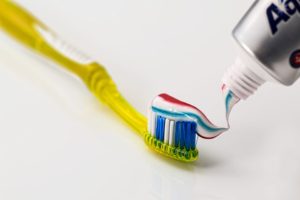 When buying a toothbrush, toothpaste, or coming in to our office, you often hear the word “plaque” associated with the health of your teeth. Plaque is one of the main reasons why it is so important to keep up with a daily oral hygiene routine that includes brushing two times each day for at least two minutes, and flossing regularly as well. Here’s what you need to know about plaque and what it can do to your smile.
 Wisdom teeth are the last new teeth that will enter your mouth. Most patients have some form of complications resulting from their wisdom teeth. Did you know that your wisdom teeth can impact your overall health? Here’s what you need to be aware of regarding your wisdom teeth.
 Taking care of your dentures can seem like an added chore. Don’t worry, with a little effort your dentures can stay clean. Here are 5 tips for keeping your dentures clean and your smile healthy.
 Men, dental examinations and treatment are important for you, too. Did you know according to the Academy of General Dentistry (AGD), by age 72 men lose an average of 5 teeth? That number jumps to 12 if you are also a smoker. Here’s what you need to know about keeping your mouth healthy. Follow these tips and you can beat the odds stacked against men and their oral health.